
Automotive window tinting protects your vehicle’s interior by blocking up to 99% of harmful UV rays and rejecting solar infrared heat. Without this barrier, constant sun exposure breaks down chemical bonds in leather, vinyl, and plastics, causing discoloration, cracking, warping, and premature aging.
While most drivers assume interior wear is just part of owning a car, that degradation actually stems from solar radiation passing straight through untreated factory glass. Standard automotive glass provides visibility and safety rather than comprehensive solar rejection, allowing heavy UV and heat loads to pour into the cabin. Understanding how window film blocks this energy is the key to preserving your vehicle’s factory finish and resale value.
The Three Components of Sunlight Attacking Your Cabin
Solar energy reaching your vehicle consists of three distinct wavelengths, and each one damages your cabin materials differently.
- Ultraviolet (UV) Radiation: Accounting for roughly 3% to 5% of solar energy, UV rays are the primary culprit behind fading and material breakdown. UV-A and UV-B rays penetrate upholstery, leather, and plastics, triggering photodegradation, a chemical reaction that breaks down polymers and dyes, stripping away color and elasticity. Even on overcast winter days, UV rays actively hit your interior.
- Infrared (IR) Radiation: Making up more than half of the solar heat you feel on your skin, infrared rays bake your cabin rather than directly bleaching it. When infrared energy enters your car, dark surfaces like your dashboard and seats absorb it, driving interior surface temperatures to extreme levels. This heat accelerates chemical off-gassing, dries out leather hides, weakens headliner adhesives, and causes plastics to expand and contract until they crack.
- Visible Light: Accounting for the remaining solar energy, visible light contributes to both heat buildup and long-term fading. Over thousands of hours of exposure, high-intensity visible light slowly bleaches fabrics and carpets, particularly in vehicles with lighter or brightly colored interiors.
How Modern Window Film Acts as an Interior Shield
Quality automotive Edina window tinting is far more than darkened glass for privacy. Modern architectural-grade automotive films are multi-layered optical barriers engineered to filter specific wavelengths of the solar spectrum while maintaining clear visibility from the inside out.
Blocking 99% of Ultraviolet Rays
High-performance window films incorporate specialized UV inhibitors directly into their polyester layers and mounting adhesives. Once installed, these films block 99% or more of both UV-A and UV-B radiation. Because photodegradation is virtually halted, leather retains its supple texture and deep dye saturation, wood and carbon-fiber trim pieces keep their clear-coat luster, and dashboard polymers stay flexible instead of turning brittle.
Rejecting Infrared Heat with Nano-Ceramic Technology
Older dyed window tints relied on dark pigments to absorb visible light, offering minimal heat rejection and often turning purple over time. Modern nano-ceramic window films use microscopic, non-metallic ceramic particles embedded within the film layers. These particles selectively reject up to 80% to 90% of infrared heat without interfering with cellular signals, GPS, or keyless entry systems. Stopping heat at the glass keeps interior surface temperatures dramatically lower, preventing the thermal stress that warps dashboards and loosens adhesives.
Reducing Glare and Visible Light Stress
Even if you prefer a lighter shade of tint that looks close to factory glass, modern films filter harsh visible light. Cutting down glare protects sensitive electronic screens such as infotainment displays and digital instrument clusters from washout and heat damage, while preventing carpets and fabric seats from slowly bleaching over years of outdoor parking.
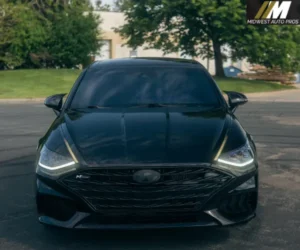
Comparing Untreated Factory Glass vs. High-Performance Window Film
| Protection Factor | Untreated Tempered Factory Glass | Standard Dyed Window Film | Nano-Ceramic Window Film |
| UV Ray Rejection | 30% – 50% (Allows heavy UV-A penetration) | Up to 99% | 99%+ (Comprehensive UV-A & UV-B block) |
| Infrared Heat Rejection | Minimal (10% – 15%) | Low (15% – 25%) | High (Up to 80% – 90%) |
| Dashboard & Leather Protection | High risk of cracking, drying, and fading | Moderate protection against fading; heat still builds | Maximum protection against both fading and thermal warping |
| Film Longevity & Color Stability | N/A | Prone to bubbling and turning purple over 3–5 years | Lifetime color stability; engineered not to fade or peel |
| Electronics & Signal Clarity | No interference | No interference | Zero interference (Non-metallic construction) |
Why Installation Craftsmanship Matters Just as Much as the Film
Even the highest-grade nano-ceramic film fails if installed poorly. Gaps, trapped dust, or improper heat-shrinking create weak points where edges peel, and moisture compromises the adhesive.
At Midwest Auto Pros, we treat window tinting as a core part of our vehicle preservation services designed to protect your investment. With 12+ years of experience, our technicians install defensive films and coatings for lasting protection, built on precision, professionalism, and pride. Operating as a full-service studio committed to craftsmanship without compromise, we decontaminate every glass surface, micro-edge each pattern for zero light gaps, and custom-shrink film to your windows’ exact curves. Backed by our local accountability promise, whether a driver visits us from Chaska for a family SUV or schedules window tinting in Edina for a sports car, our standard remains clean, distortion-free work that delivers solutions that last.
Choosing the Right Tint Setup for Your Driving Habits
Not every driver needs the darkest shade on the shelf, and an honest shop will never push you into a package that does not fit how you actually use your vehicle. If your car stays in a home garage and a covered work ramp, your solar exposure looks very different from someone who parks all day outdoors or logs long highway miles.
When comparing options for window tinting in Edina, MN, separate darkness (Visible Light Transmission, or VLT) from actual heat and UV rejection. Modern nano-ceramic films achieve maximum UV and infrared rejection even in lighter shades, meaning you do not have to sacrifice nighttime visibility to protect your leather and dashboard. Choosing a legal film percentage that fits your daily driving environment gives you the best balance of safety, comfort, and interior preservation. Always check specific Total Solar Energy Rejected (TSER) and infrared rejection ratings rather than judging a film solely by how dark it looks so you get real thermal protection for your cabin.
People Also Ask
Does clear or light window tint still protect a car’s interior from fading?
Yes. Interior fading is caused primarily by ultraviolet (UV) radiation, not visible light. Clear and light-shade nano-ceramic window films still block 99% of UV rays and reject substantial infrared heat, delivering nearly the same interior protection as darker shades.
How much cooler does window tint keep a car’s interior?
Depending on the film selected, nano-ceramic window tint reduces interior cabin and surface temperatures by 15°F to 25°F or more compared to untinted glass. Cooler dashboard and seat surfaces directly prevent leather from drying out and plastics from warping.
Is window tinting worth it if I park in a garage at home?
Yes, because most sun damage happens while parked at work, running errands, or driving during peak daylight hours. A few hours of midday sun exposure each day causes cumulative UV damage and heat stress to upholstery and trim over just a few years.
Will window tint damage my car’s rear defroster lines or electronics?
No, provided the film uses non-metallic ceramic or carbon materials and is installed properly. Unlike older metallic films that interfered with radio, GPS, and keyless entry signals, modern ceramic films are signal-safe and adhere cleanly over rear defroster grids without damaging them.
Honest Guidance for Protecting Your Vehicle
If it were our own vehicle, we at Midwest Auto Pros would never leave factory glass unprotected, especially when keeping an interior intact is one of the smartest ways to protect your car’s long-term value and daily comfort. At the same time, we believe in explaining how the technology works before recommending a specific film. If you have questions about film grades and want straightforward answers without sales pressure, we are glad to walk you through samples, break down heat-rejection specs in plain language, and help you choose a setup that makes sense for how you drive.
Contact us today when you are ready to talk through protecting your vehicle.